

Chenin

Estates with historic buildings

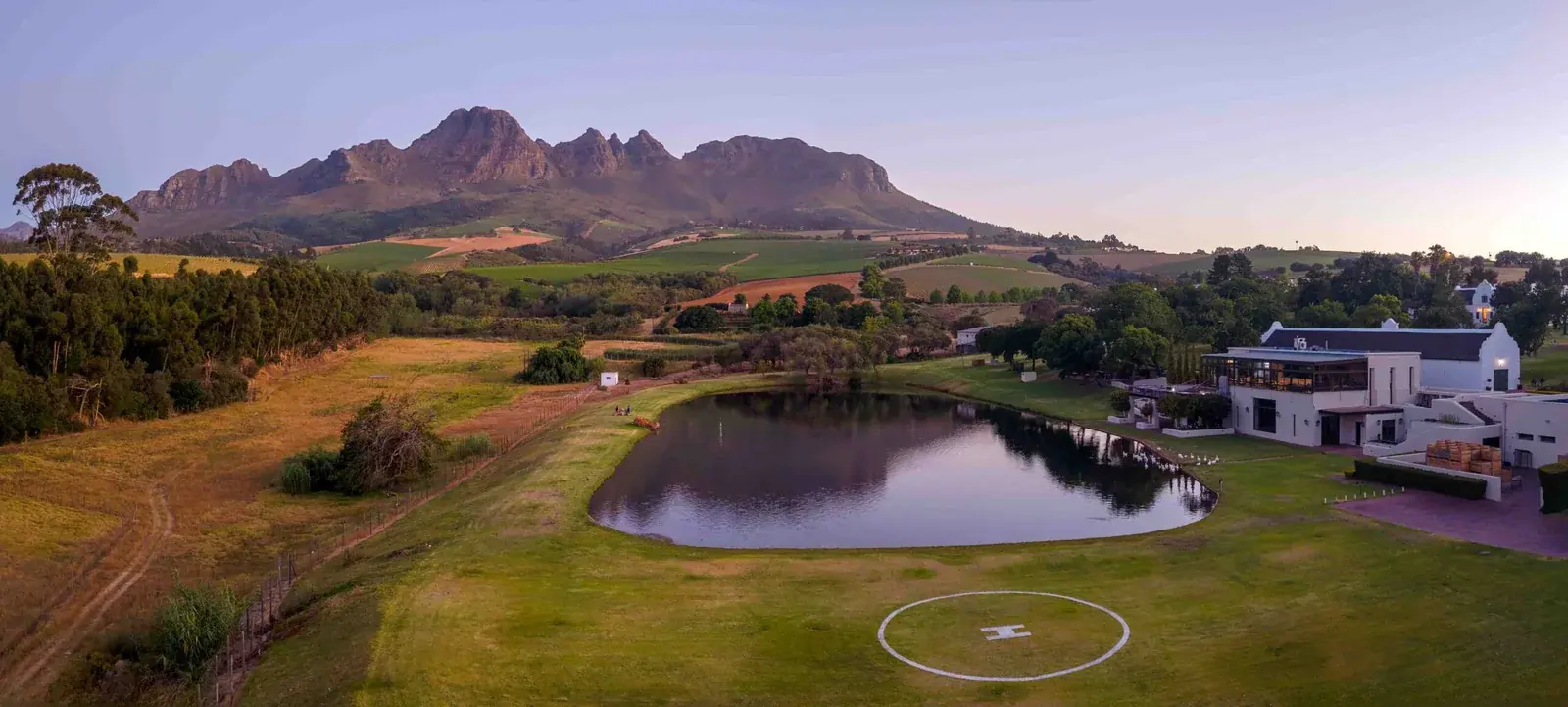
Cape Dutch homesteads, old cellars and listed heritage sites. Places where the buildings are part of the visit.

At a glance

Closest to Cape Town
Hazendal, about 34 min by car
Highest rated
Rust en Vrede (4.2)
Open on Sundays
9 of 11
Serve lunch
10 of 11
Have somewhere to stay
6 of 11
Areas
Helderberg (3), Bottelary (2), Jonkershoek Valley (1)

11 wineries

The story

How to read a historic Cape estate

The date in a Cape Dutch gable marks when that gable was made, which is not always when the house was built.

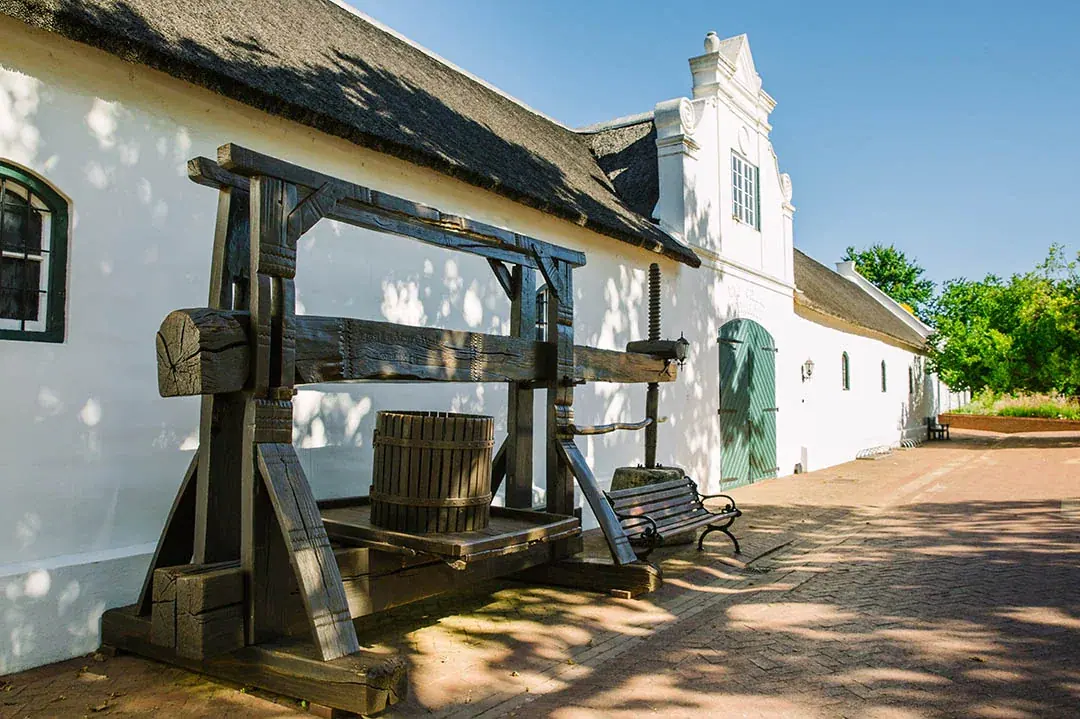
Most historic wine estates around Stellenbosch are Cape Dutch: single-storey homesteads with thick whitewashed walls, reed thatch and shaped gables, set with a cellar and outbuildings around a farmyard called the werf. Knowing those parts tells you what you are looking at and roughly when it was built.

Cape Dutch in plain words

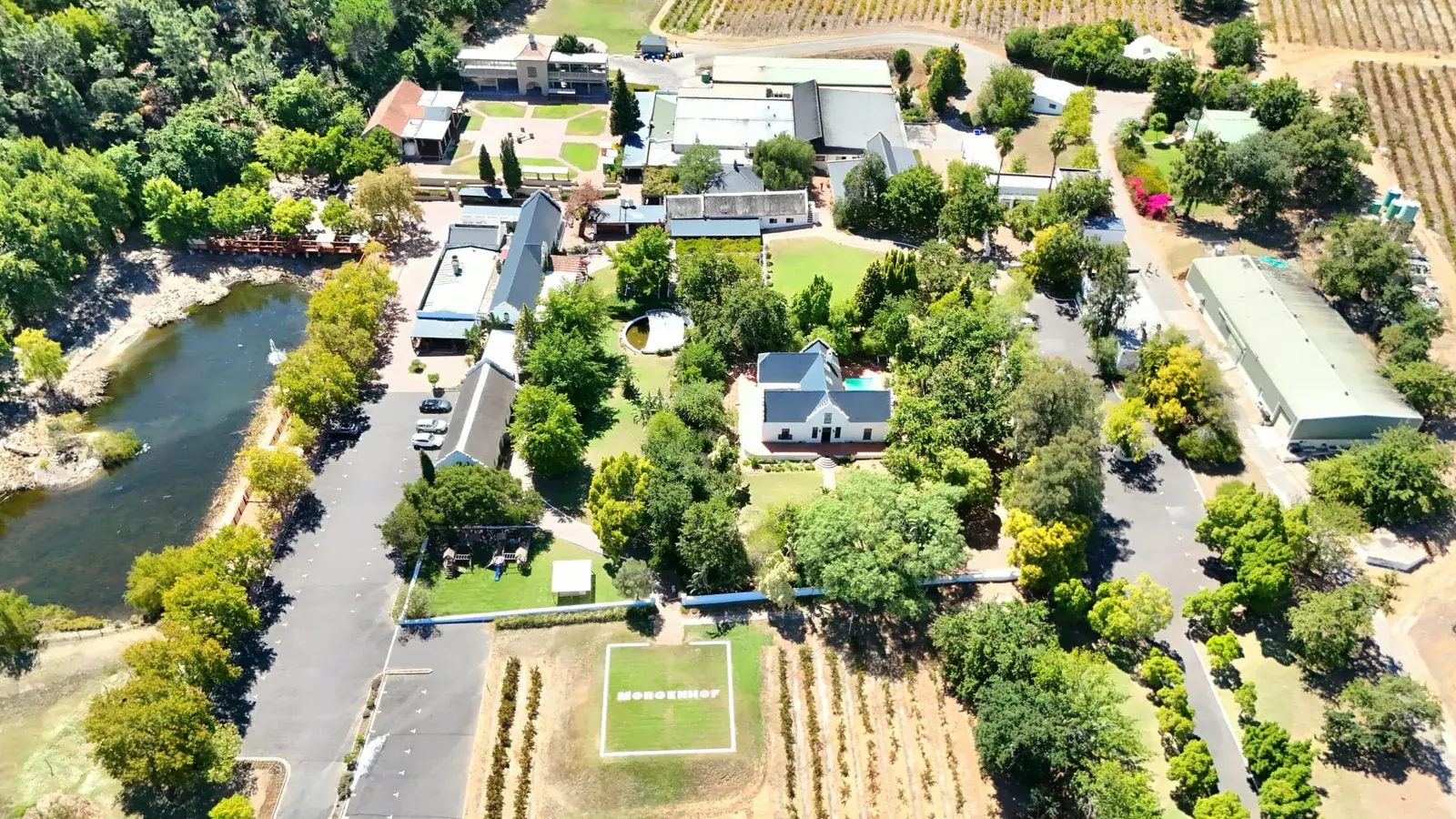
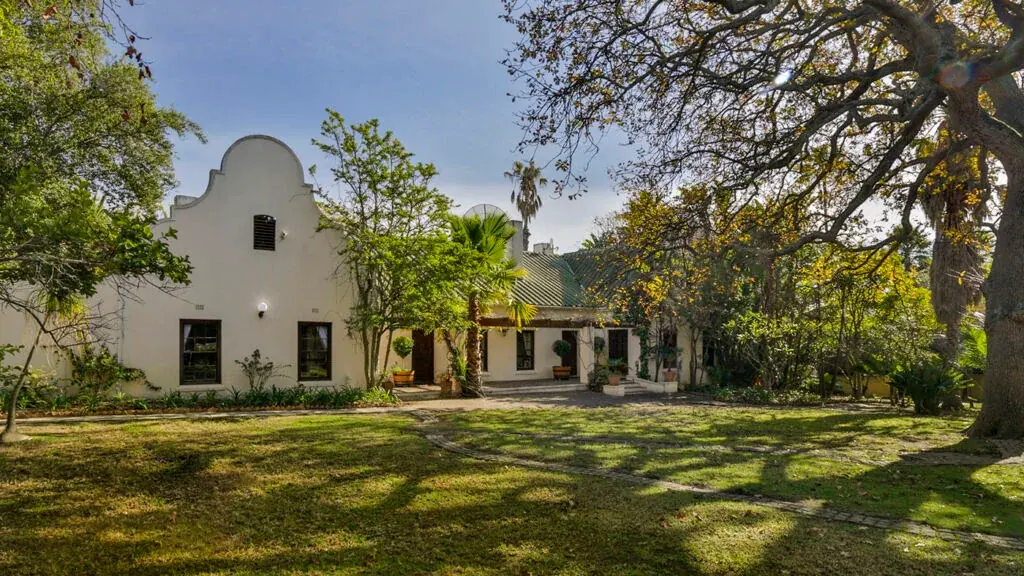
The style grew up in the Dutch Cape colony from the 17th century. The houses are single-storey, with thick lime-washed walls, reed thatch, and gables in local versions of the Baroque and later Rococo. Seen from above, the plans are short, symmetrical rectangles arranged as an E, H, T or U.

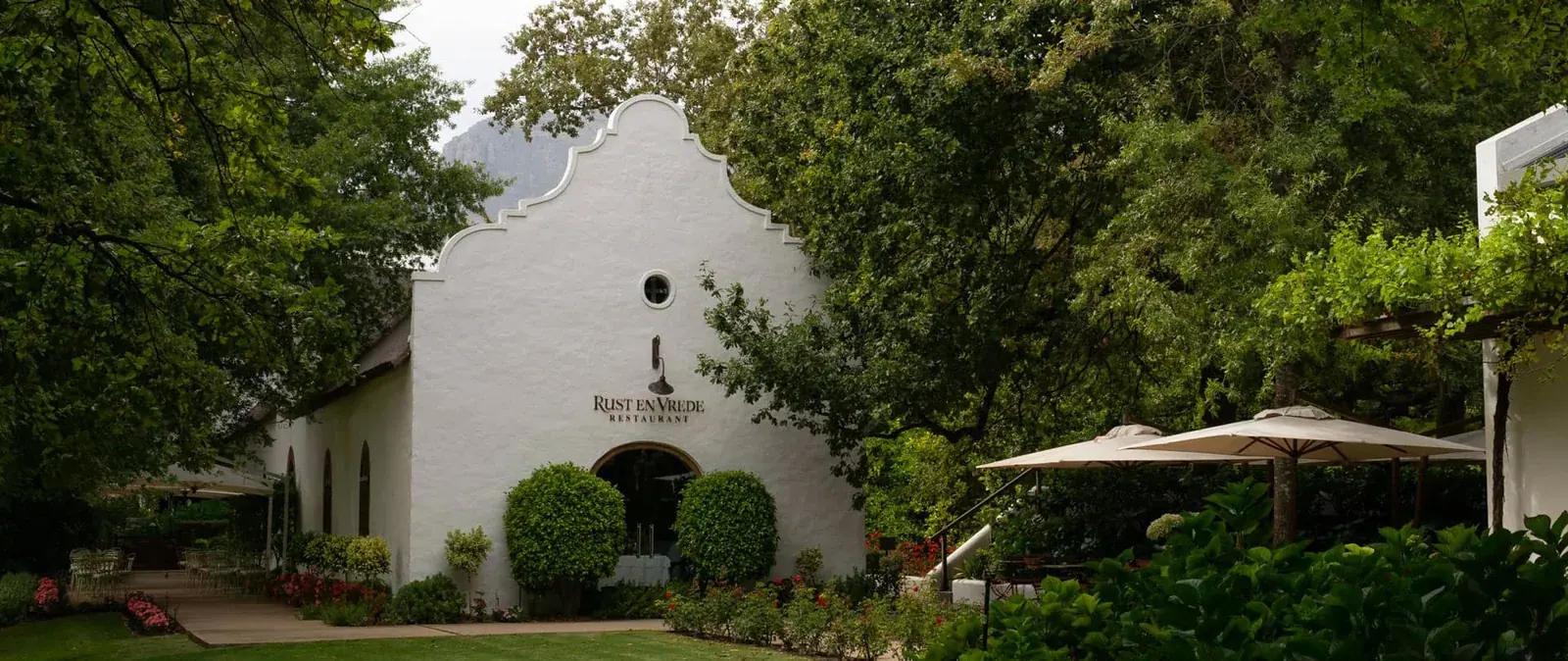
Gables are the famous part, but not every Cape Dutch house has one. The style fell out of fashion by the mid-19th century and was revived from 1893, when Herbert Baker rebuilt Groote Schuur for Cecil Rhodes, so some gables you see are revival work rather than originals.

How to read a historic Cape estate

The werf: read the whole yard

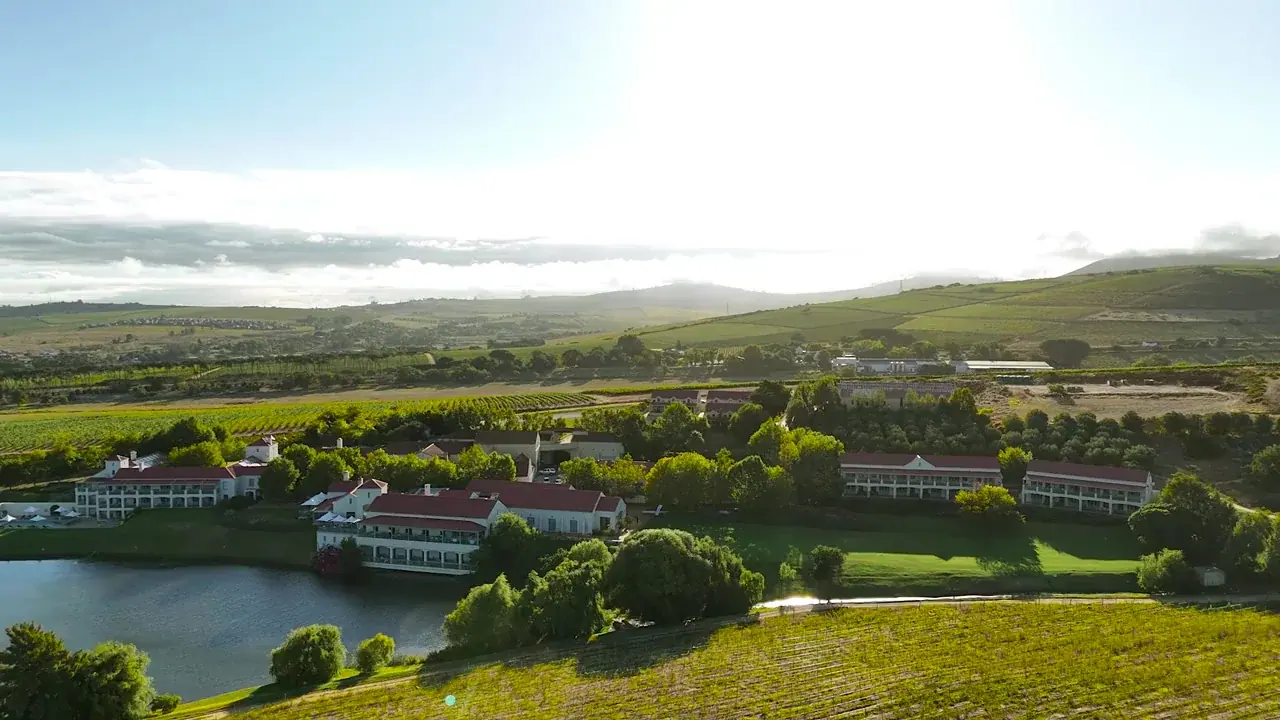
A werf is a farm homestead and its immediate surroundings. Traditionally a whitewashed ring wall enclosed the house and its outbuildings, and the architectural historian Hans Fransen wrote that no werf in the Cape wine districts is complete without a gabled cellar next to the homestead.

Fransen used Lanzerac as his example in 1967: a homestead with a forecourt surrounded by outbuildings and a werf wall. Today its manor house and werf together are a Provincial Heritage Site, and the first cellar dates from the early 1800s.

How to read a historic Cape estate

How to read a historic estate

Look for a year in the gable plaster. It usually marks when that gable was built or rebuilt, and on the same farm the dates can differ: on Weltevreden the cellar gable reads 1804 and the main gable 1812. Bertha is on Weltevreden, a national monument in the neo-classical phase of the style.

Then compare the founding date with the buildings. At Webersburg the farm was granted in 1693 but the homestead and cellar date from 1786. At Asara Wine Estate the manor house of 1845 became the cellar in 1953. Mooiplaas Wine Estate finished its manor house in 1833, and it was declared a national monument in 1989.

Old cellars are the easiest way inside. Hazendal pours in its original 1870 cellar, and Neethlingshof's cellar was completed by the Marais family in 1802.

How to read a historic Cape estate

Questions people ask

What is a werf?
A werf is a Cape farm homestead and the yard around it, usually with the cellar and outbuildings grouped close by and, traditionally, enclosed by a low whitewashed ring wall.
What are the main features of Cape Dutch architecture?
Single-storey buildings with thick lime-washed walls, reed thatch and shaped gables, laid out in simple symmetrical plans shaped like an H, T, U or E. Many farmhouses have the cellar beside them on the same werf.
Does the date on a gable tell you when the house was built?
Not always. A gable date marks when that gable was made, which can be a rebuild, and different buildings on one farm often carry different years. The founding date of the farm is usually earlier still.
Can you go inside historic wine cellars in Stellenbosch?
Yes, at several estates. Lanzerac runs free cellar tours daily at 11h00 and 15h00, Hazendal's tasting lounge is in its 1870 cellar, and Morgenhof holds its signature tasting in its historic cellar.

Updated October 2026.