Chenin

Simonsberg-Stellenbosch wine farms

On the lower slopes of the Simonsberg, north-east of Stellenbosch town.

At a glance

Closest to Cape Town
Kanonkop, about 45 min by car
Highest rated
Kanonkop (4.1)
Open on Sundays
2 of 4
Serve lunch
2 of 4

4 wineries

Plan

A day in Simonsberg-Stellenbosch

Three estates close together, with lunch in the middle. Check opening days before you go, as they differ between the three.

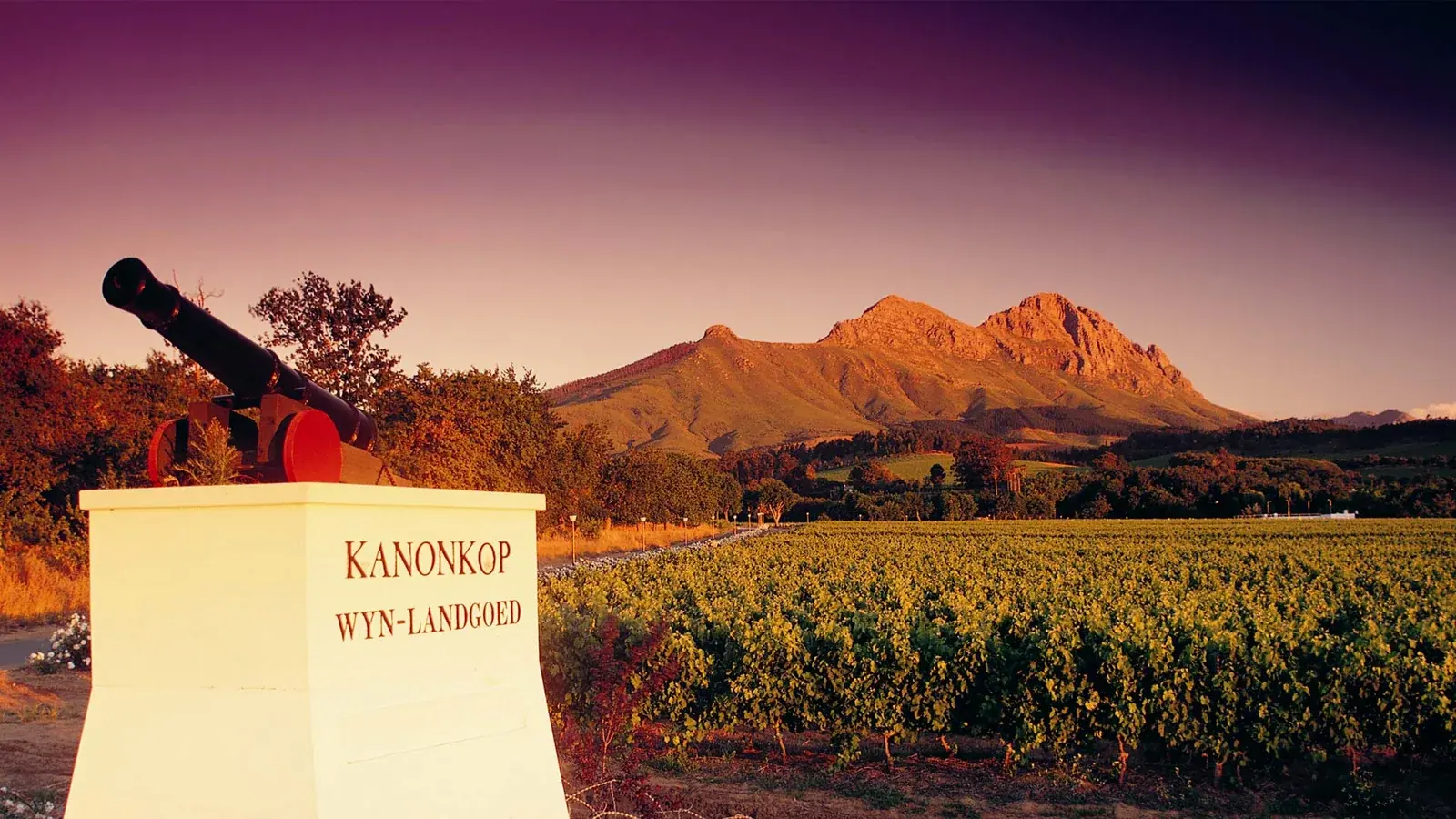
  1. MorningKanonkopKnown for Pinotage and Cabernet Sauvignon.
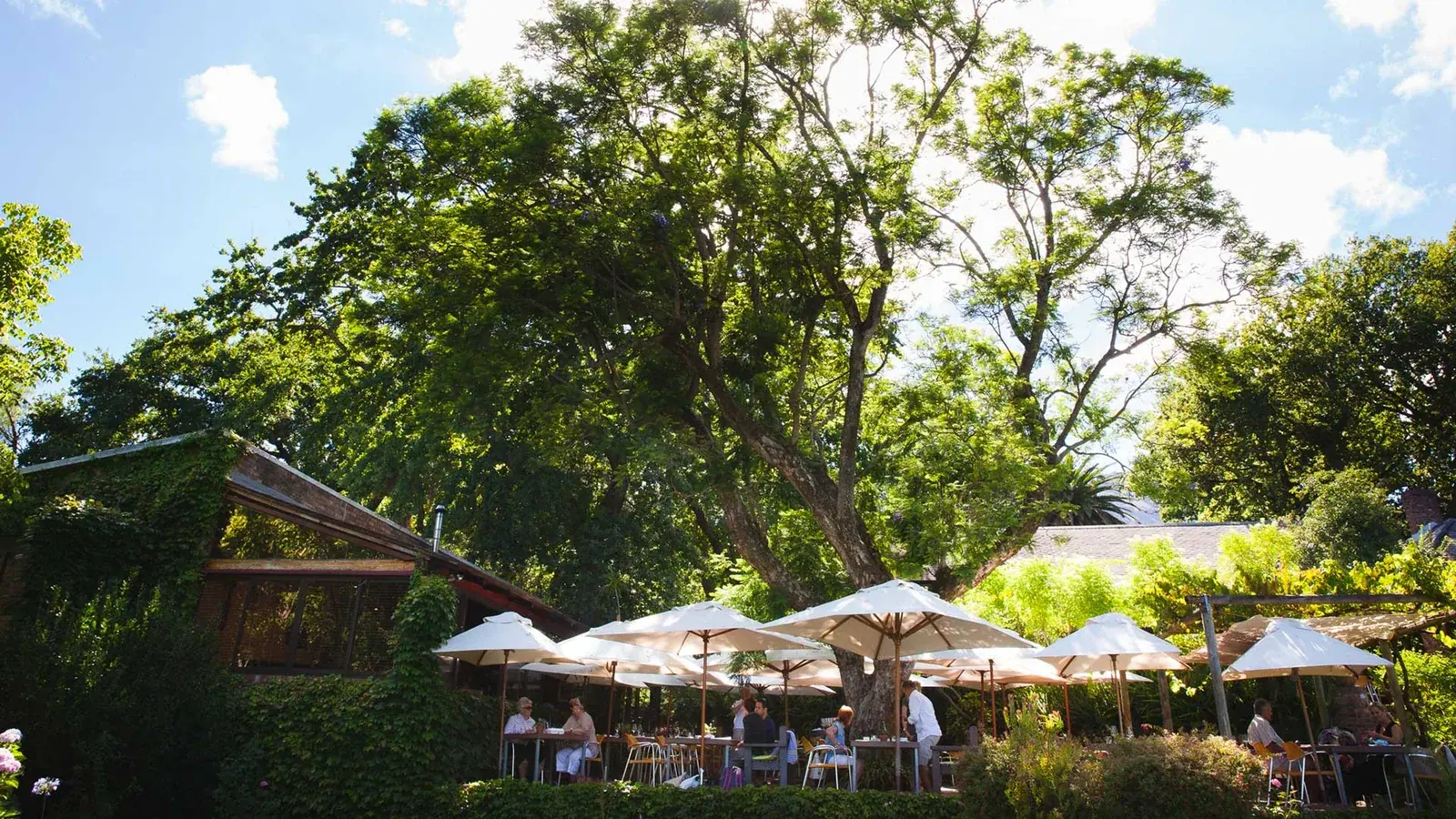
  2. LunchDelheimKnown for Pinotage and Merlot, serves lunch, about 2.9 km from the last stop.
  3. AfternoonMarklewKnown for Chardonnay and Pinotage, about 3.4 km from the last stop.
Open this day

From there you can pick a date, see who is open, reorder stops, add more and open the route in Google Maps.

The story

About Simonsberg-Stellenbosch

When Simonsberg-Stellenbosch appears on a label, every grape in the bottle grew on these granite slopes.

Simonsberg-Stellenbosch is an official Wine of Origin ward on the lower slopes of the Simonsberg, a short drive north-east of Stellenbosch town. Its granite slopes are known for Cabernet Sauvignon and Pinotage, and when the ward's name is on a label, every grape came from here.

What the ward name tells you

A ward is the smallest area name in the Wine of Origin system after a single estate or vineyard. When Simonsberg-Stellenbosch appears on a label next to Wine of Origin, it certifies that all of the grapes were grown inside the ward. Blend in fruit from another ward and the wine has to drop to the district name, Stellenbosch.

Several estates on our list use it: Kanonkop, Remhoogte and Marklew, and Delheim on its Cabernet Sauvignon. Don't confuse the ward with Greater Simonsberg, one of the Stellenbosch Wine Routes' sub-routes. That is a wider touring area, reaching into Jonkershoek and Banghoek, and has nothing to do with labels.

About Simonsberg-Stellenbosch

Granite under the vines

The Simonsberg rises to almost 1,400 metres and fills the view north of town. Its foothills break into small valleys and spurs, so vineyards a few hundred metres apart can face different directions and ripen at different speeds. The Agricultural Research Council's soil survey found red and yellow soils derived from granite along these footslopes.

Kanonkop's Cabernet Sauvignon notes list exactly that: decomposed granite with Hutton and Clovelly soils, partly dry-farmed. Pinotage, Cabernet Sauvignon and Merlot run through our list here, with Chenin Blanc as the white that keeps turning up.

About Simonsberg-Stellenbosch

The estates on our list

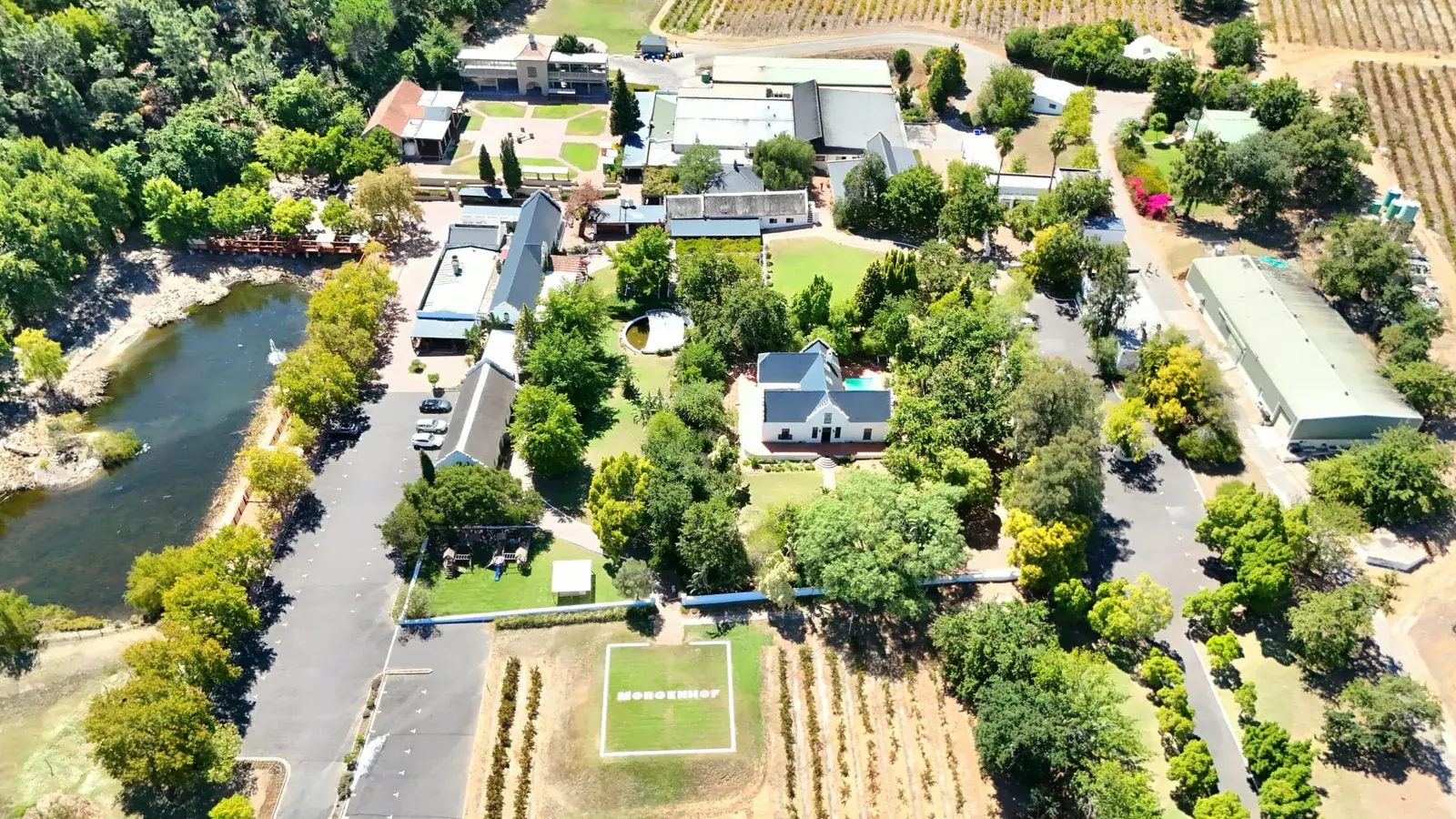
Kanonkop hosts private tastings inside its maturation cellar on weekdays, by booking. Morgenhof has been on these slopes since 1692 and pours its Signature Tasting in the historic cellar.

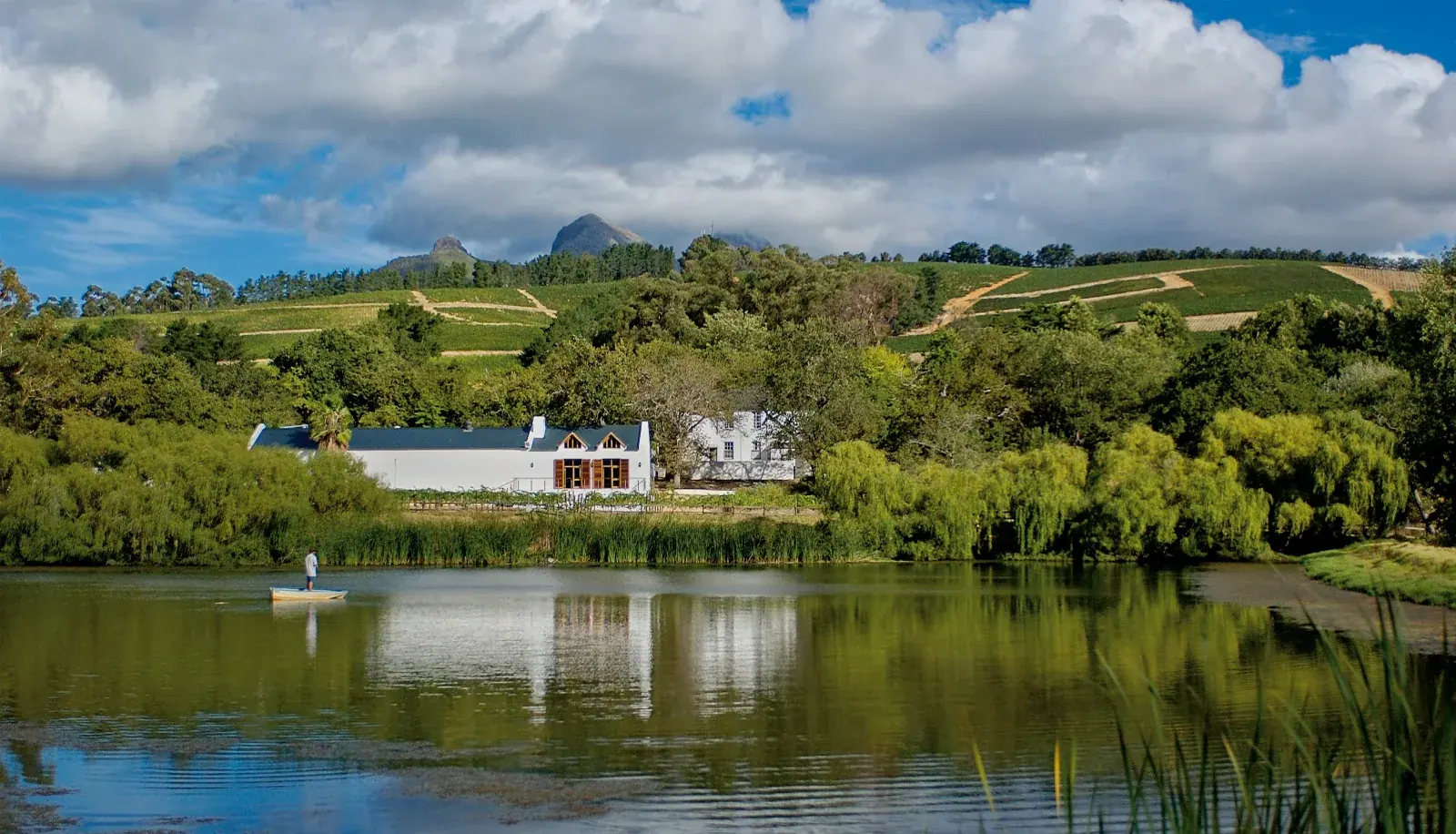
At Remhoogte you can taste the Boustred Chenin Blanc on its own, and Marklew, out at Muldersvlei on the Klapmuts road, makes a Cape Flora Pinotage in a gravity-fed cellar you can visit by appointment.

About Simonsberg-Stellenbosch

Questions people ask

Is Simonsberg-Stellenbosch an official wine ward?
Yes. It is one of the eight wards in the Stellenbosch district under the Wine of Origin scheme. A wine labelled Simonsberg-Stellenbosch must be made entirely from grapes grown inside the ward.
Where is Simonsberg-Stellenbosch?
It covers the lower slopes of the Simonsberg mountain, just north-east of Stellenbosch town along the R44 and the roads that branch off it. Most estates are a short drive from the town centre.
What is Simonsberg-Stellenbosch known for?
Red wine from granite soils, particularly Cabernet Sauvignon, Bordeaux-style blends and Pinotage. Kanonkop's wines, Pinotage included, carry the ward name.
Is Greater Simonsberg the same as Simonsberg-Stellenbosch?
No. Greater Simonsberg is a touring sub-route drawn up by Stellenbosch Wine Routes and is larger, taking in Jonkershoek and Banghoek. Simonsberg-Stellenbosch is the legally defined ward that can appear on a label.

Updated October 2026.