Chenin

Stellenbosch blends

Many of the wines Stellenbosch is known for are blends, poured under a name rather than a grape. Every estate here makes at least one red blend; the ones with the most come first.

At a glance

Closest to Cape Town
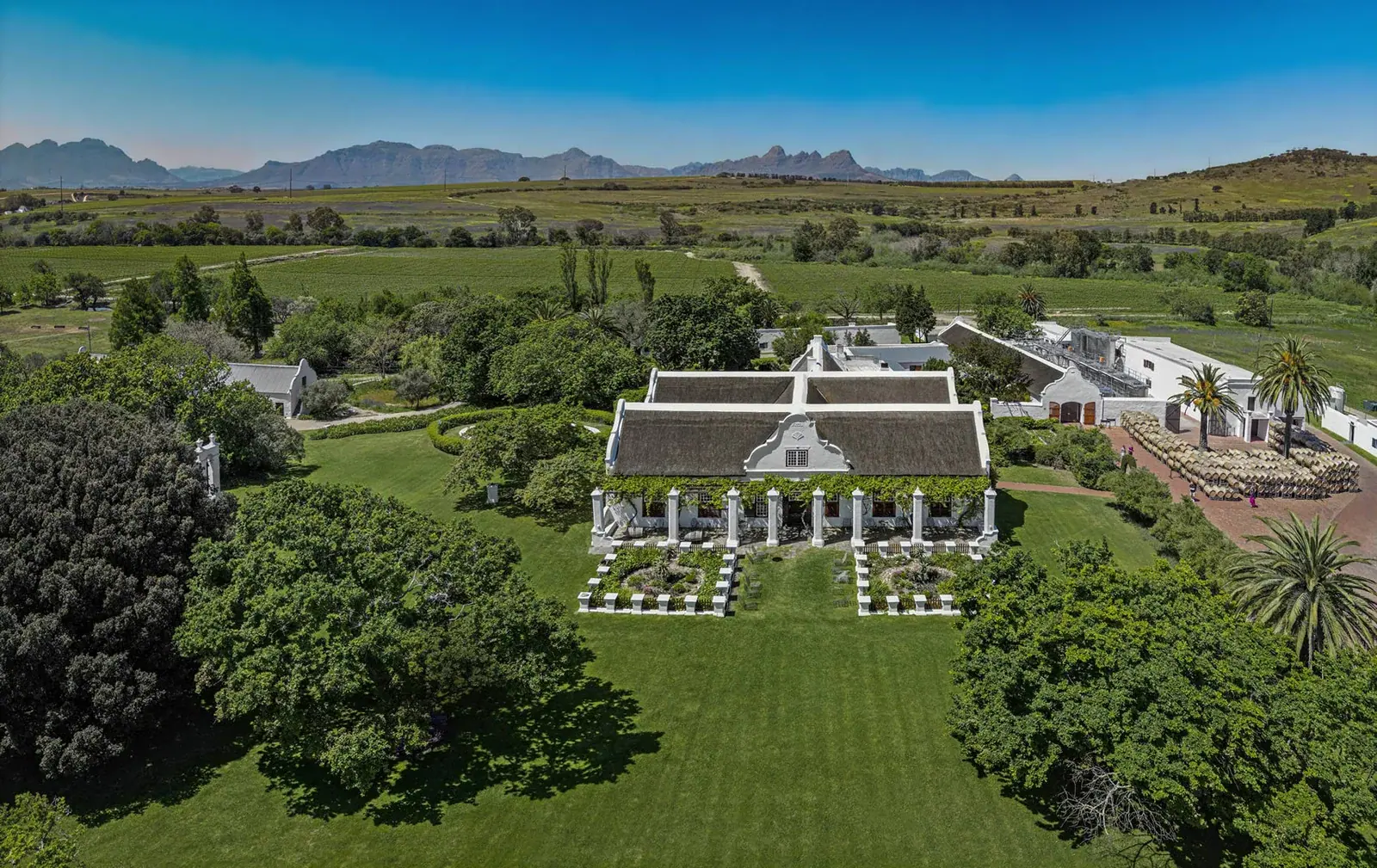
Meerlust, about 37 min by car
Open on Sundays
23 of 36
Serve lunch
22 of 36
Take walk-ins
2 of 36
Have somewhere to stay
9 of 36
Areas
Helderberg (9), Polkadraai Hills (3), Bottelary (2)

36 wineries

The story

Blends in Stellenbosch

Nico Myburgh visited Bordeaux, decided its climate was like Stellenbosch's, and made Meerlust's first Rubicon in 1980. Blends here still tend to go by a name, not a grape.

Many of Stellenbosch's long-running reds are blends, sold under a name rather than a grape: Rubicon, Paul Sauer, Fusion V. Most follow the Bordeaux recipe led by Cabernet Sauvignon, while the Cape Blend brings in South Africa's own Pinotage.

The Bordeaux recipe

A Bordeaux-style blend starts with Cabernet Sauvignon, usually joined by Merlot and Cabernet Franc, sometimes Petit Verdot and Malbec. Cabernet gives the structure, Merlot fills the middle of the palate, and Cabernet Franc adds perfume.

Cabernet ripens late, and Stellenbosch's warm, dry summers get it there. Research cited by Stellenbosch Wine Routes found that afternoon air off False Bay and Table Bay cools the vineyards by three to four degrees.

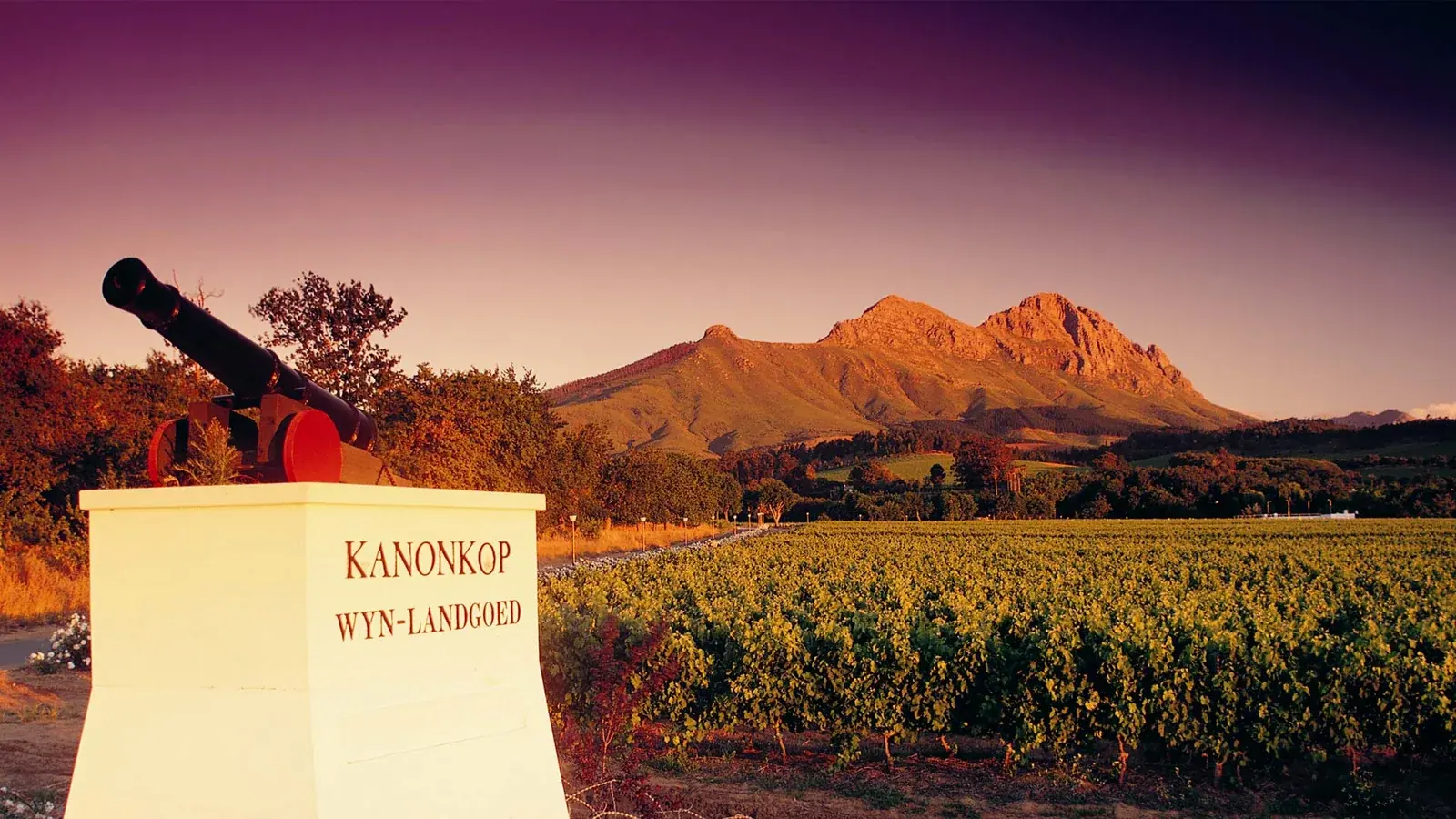
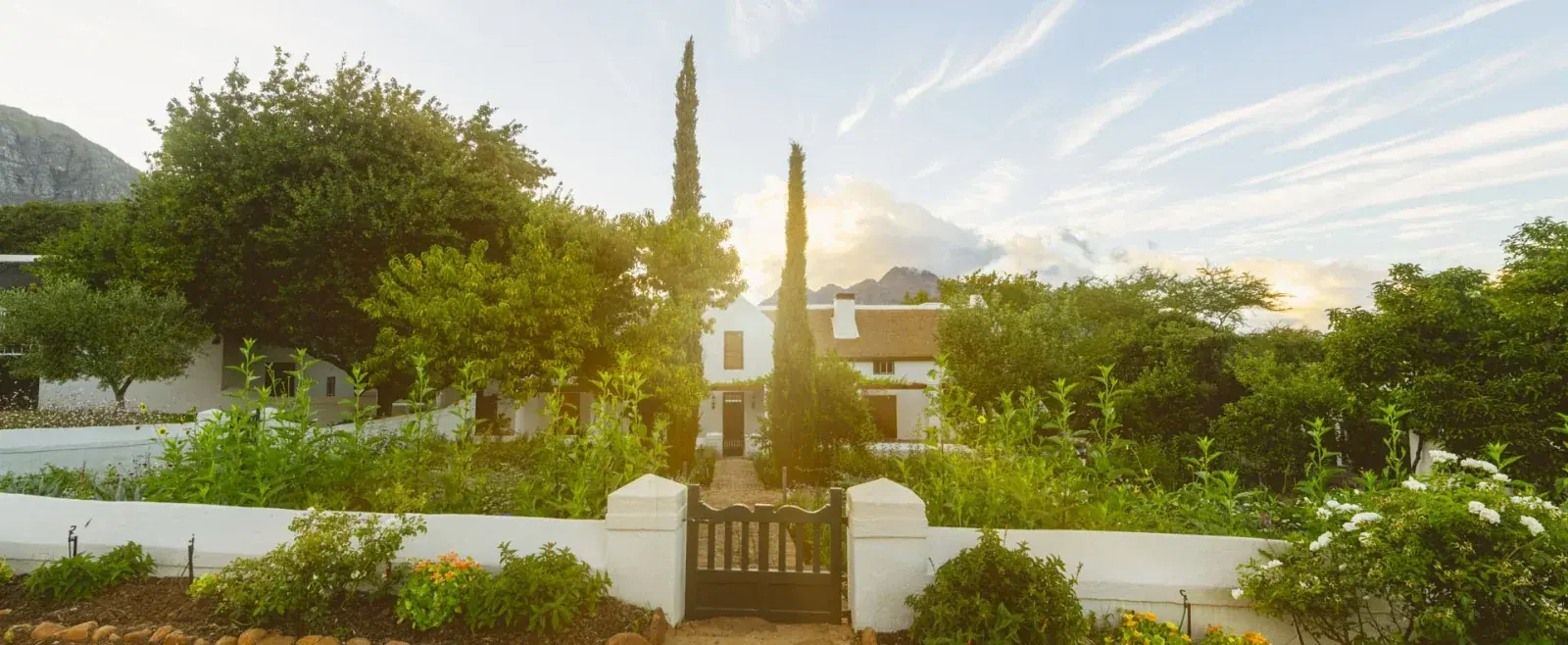
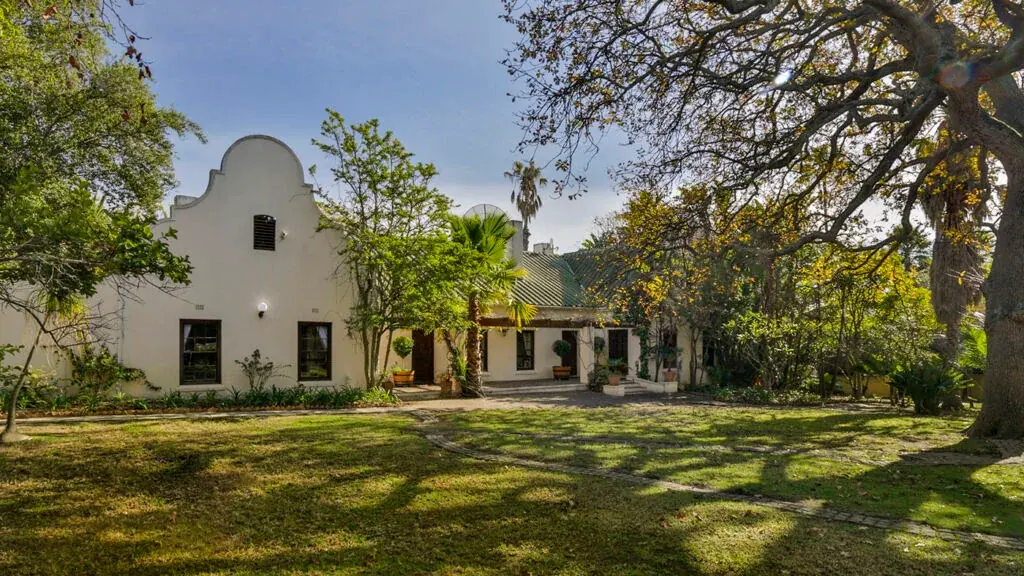
That was the reasoning at Meerlust. Nico Myburgh visited Bordeaux, judged its climate similar to Stellenbosch's, and first made Rubicon in 1980. Kanonkop followed with Paul Sauer in 1981, named after the farm's former owner, who sat in parliament for 41 years. De Toren in the Polkadraai Hills named Fusion V, first made in 1999, for the five Bordeaux grapes it brings together.
Blends in Stellenbosch

The Cape Blend

Give Pinotage, bred at Stellenbosch University in the 1920s, a real share of a red blend and you have a Cape Blend. Beyerskloof's Synergy, released in 2001 by Beyers Truter, a founding figure of the Pinotage Association, is generally cited as the first wine to put the term on its label.

There is no legal definition. The Pinotage Association's Perold Absa Cape Blend competition asks for at least 30 and no more than 70 per cent Pinotage, with Pinotage the largest single component. Outside the competition cellars set their own recipes, so the 30 per cent figure works as a guideline rather than a rule.

Blends in Stellenbosch

Shiraz, Rhône grapes and white blends

Shiraz turns up as a partner too, sometimes in blends that simply name their grapes, such as Cabernet Sauvignon and Shiraz. For the Rhône style, Neil Ellis blends Syrah with Grenache from Piekenierskloof fruit in Rodanos, named after a Celtic word for the Rhône.

White blends have their own Cape version. There is no official definition, but Winemag, which reports on the category every year, proposes any blend with more than 15 and less than 85 per cent Chenin Blanc, a style it says no other region can claim.

The other white blend comes from Bordeaux: Sauvignon Blanc for freshness, Semillon for texture. Tokara uses the same Director's Reserve name twice, for a red blend and for a Sauvignon Blanc and Semillon white from the highest slopes of its Stellenbosch farm.

Blends in Stellenbosch

Reading a blend on a tasting list

A name tells you whose wine it is, not what is in it. Ask which grapes went in, in what share, and from which vintage, because the answer changes.

Decanter notes that Rubicon is always led by Cabernet Sauvignon, at about 70 per cent, but the rest varies year by year, and Meerlust made none in 1985 or 1990. Platter's put the 1988 Paul Sauer at about 70 to 75 per cent Cabernet, with Cabernet Franc and Merlot. Last year's notes are a guide, not a promise.

Blends in Stellenbosch

Questions people ask

What is a Bordeaux-style blend in South Africa?
A red blend built from the grapes of Bordeaux, usually led by Cabernet Sauvignon with Merlot and Cabernet Franc, sometimes Petit Verdot and Malbec. Meerlust Rubicon, first made in 1980, and Kanonkop Paul Sauer, first made in 1981, are two long-running Stellenbosch examples.
What is a Cape Blend?
A South African red blend with a substantial share of Pinotage, usually at least 30 per cent under the Pinotage Association's guideline. It is not a legal category, so recipes vary, but the Association's Cape Blend competition requires 30 to 70 per cent Pinotage.
How do I know which grapes are in a named blend?
Ask at the tasting room or check the back label. Proportions shift from vintage to vintage, and some estates skip a year altogether, as Meerlust did with Rubicon in 1985 and 1990.
What is a Cape white blend?
A white blend with a significant share of Chenin Blanc, South Africa's most planted grape. There is no official definition; Winemag proposes more than 15 and less than 85 per cent Chenin, blended with any other varieties.

Updated October 2026.